Stairs & ladders
Vertical access built for a person's stride is climbed the same way — no lift, no ramp, no rework.
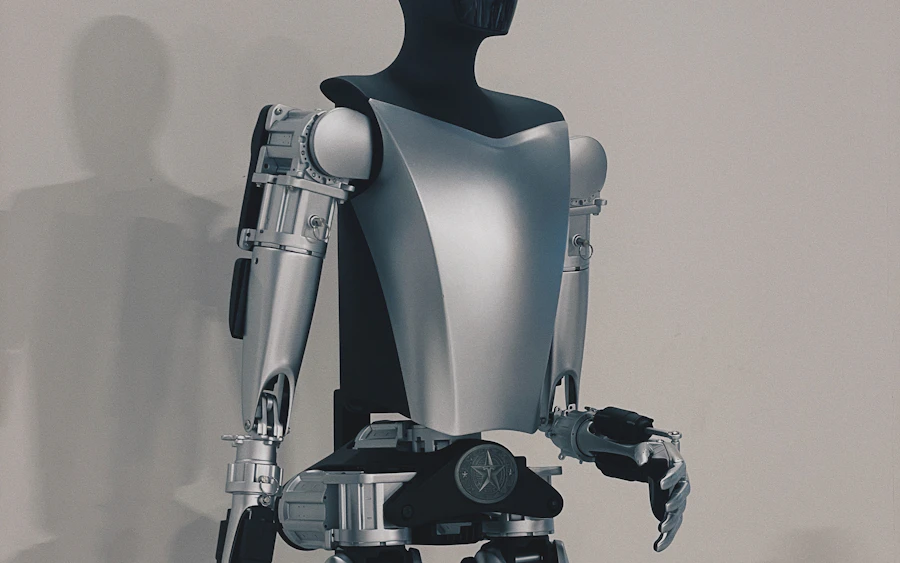
Humanoid robots
Wheels and tracks cover most of a plant, but not all of it. Stairwells, ladders, and control panels sized for a human hand are still designed around a person — so we built a platform shaped the same way.
Why humanoid, not just wheels
A wheeled or tracked platform handles the floor. A humanoid platform handles what's above it.
Vertical access built for a person's stride is climbed the same way — no lift, no ramp, no rework.
Levers, valves and panels stay exactly where they are — the robot adapts to the tool, not the other way round.
Same digital twin, same edge-AI alarms, same human supervisor as every other platform in the fleet.
The lineup
Same bipedal frame, same command layer — configured differently depending on whether the job is walking a site, working a bench, or holding a position on the line.
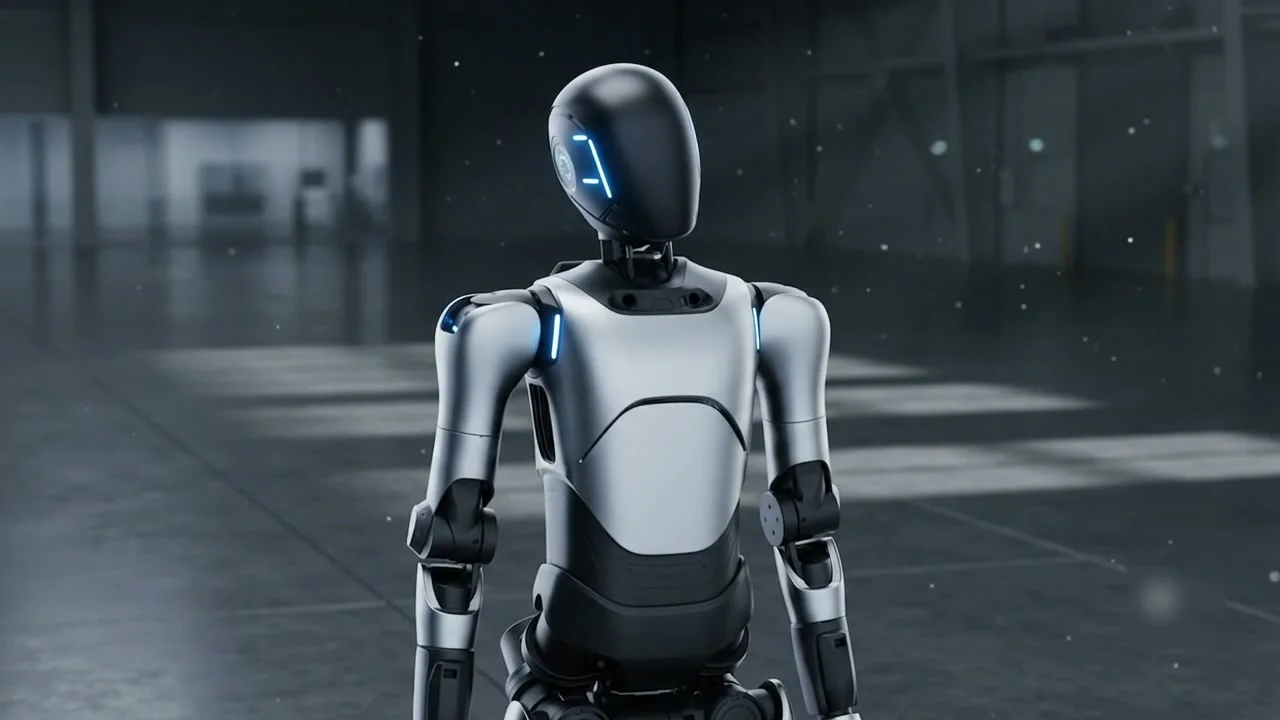
Built for walking the floor: uneven ground, low light and long corridors between checkpoints. Patrols the same route a guard would, flagging what's changed since the last pass.
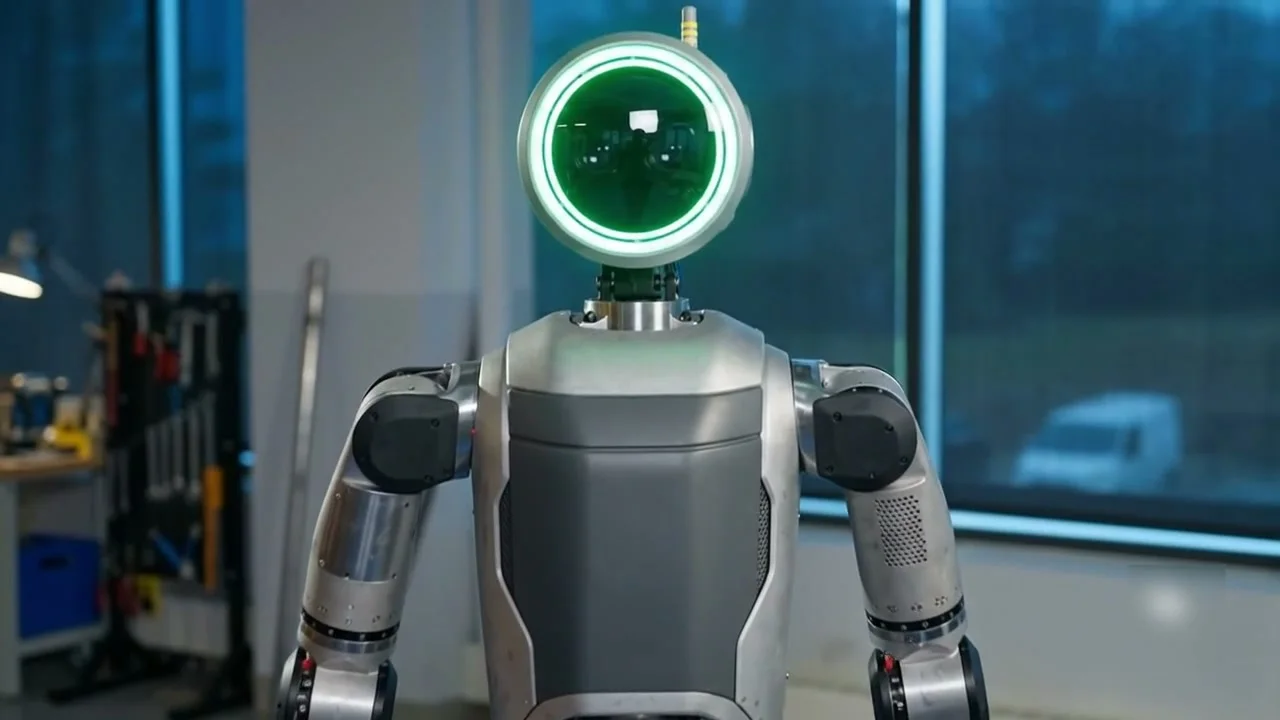
Stationed at a fixed post — a workshop, a loading bay, a control room — watching for the one anomaly a fixed camera would miss. The sensor ring reads as a status light from across the room.
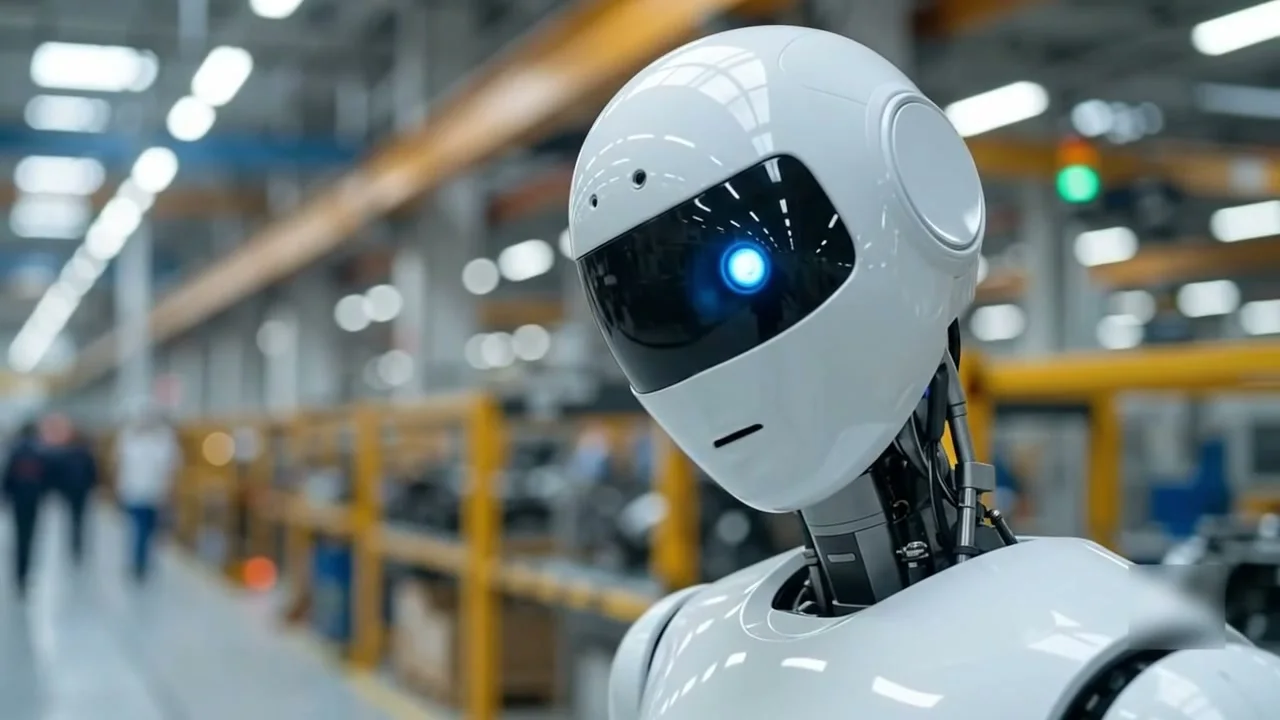
Works a fixed position on the production line itself, handing off and taking over tasks sized for a person's reach — built to stand exactly where a line worker would.
Tell us which access points still need a person, and we'll show you what a humanoid platform can take off the roster.